ServicesSurge Protection
Surge Protection for Grand Prairie Homes
We install a whole-home surge device at your electrical panel and check the grounding it depends on. That takes the hit off your AC board, fridge, washer and TVs. Spring storm season is the best time to have it in place, so we plan the work ahead of it.
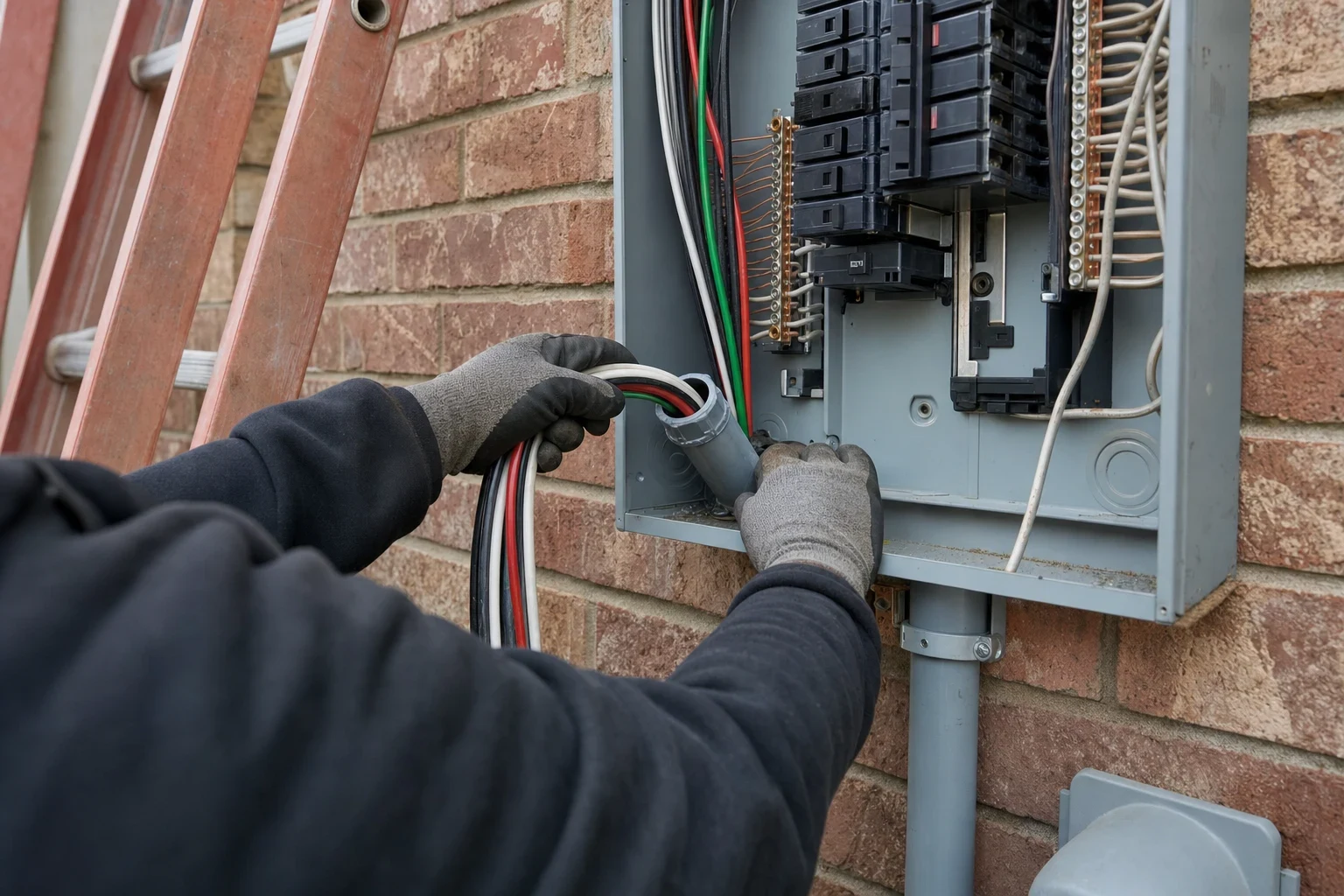
What a whole-home surge device does
A surge is a short spike in voltage. Some come from lightning or utility switching outside. Most start inside your home, when big motors like the AC compressor or the fridge cycle on and off. Each spike is small, but they add up. Circuit boards in appliances wear out early and nobody connects it to surges.
A whole-home device mounts at your panel, usually on its own breaker. When voltage jumps, it sends the extra energy to ground before it reaches your circuits. Plug-in strips still help at the TV or computer, but they can't protect hardwired things like the furnace, the AC, or the oven.
We like to get this done before the spring storms roll through North Texas. It's a short job, and it's easier to schedule in a calm week than right after something fried.
What the work includes
- Panel check first
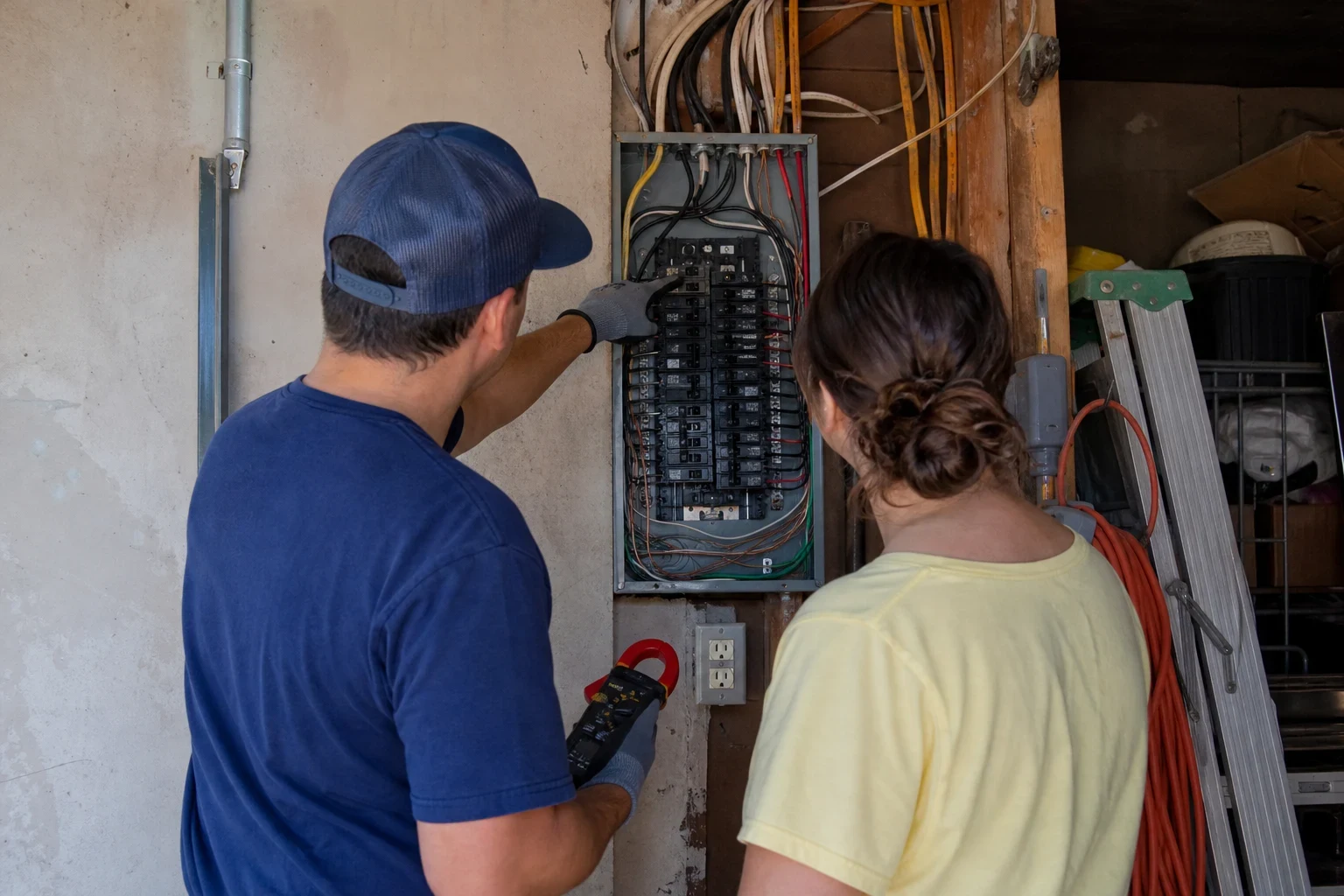
- We open the panel and look at space, breaker condition and the main lugs. If there's no room for a breaker or something looks heat-damaged, we tell you before we go further.
- Whole-home surge device
- We mount the device at or next to the panel and land it on a dedicated breaker. We keep the leads short and straight, because long, looped wires make the device slower to react.
- Grounding check
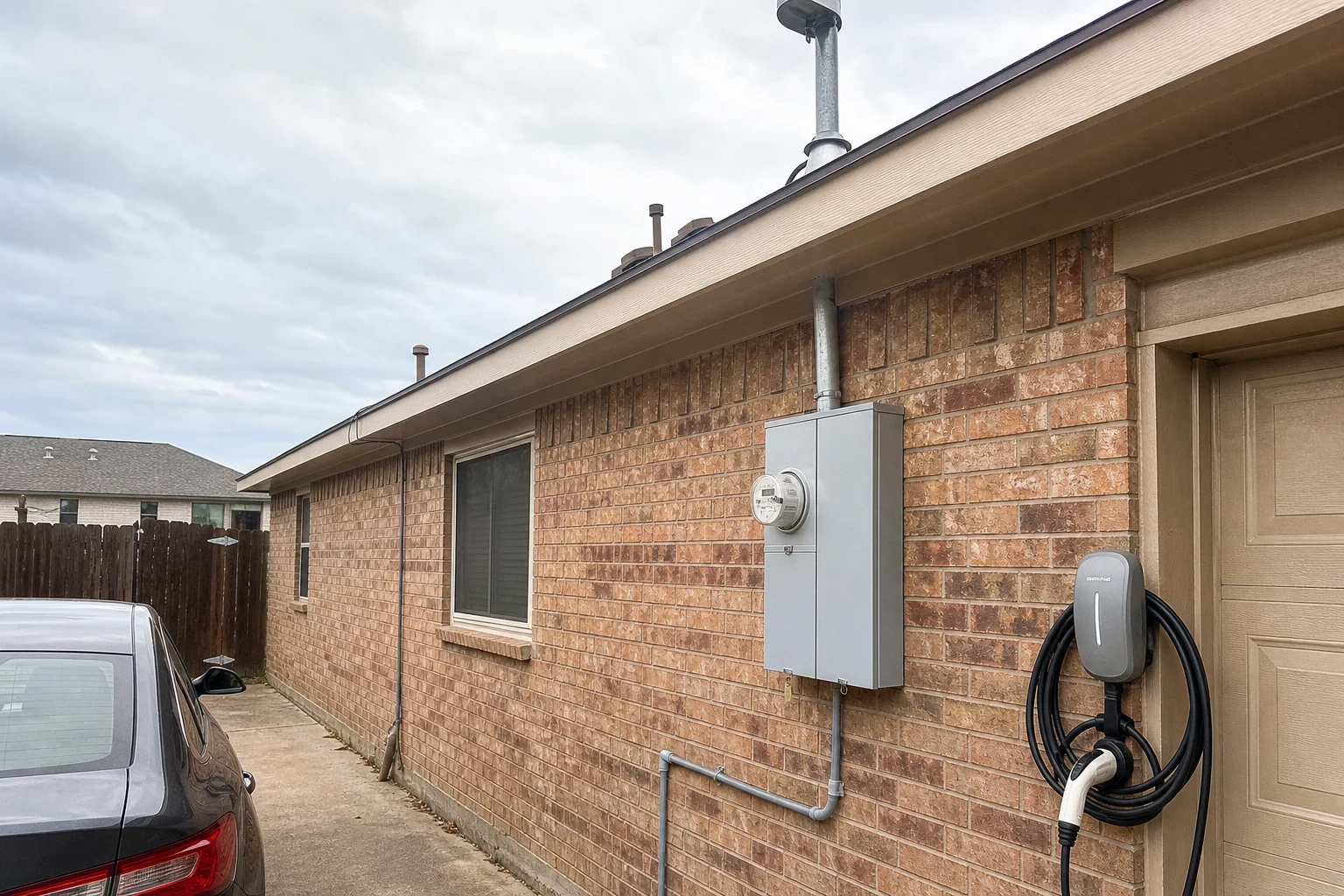
- The device needs a solid path to earth or it has nowhere to send the spike. We look at the clamp on the ground rod, follow the grounding wire back to the panel, and check where it ties into the water and gas piping. Loose or rusty clamps get tightened or swapped out.
- Cable and phone line entry
- Surges also ride in on the TV cable and old phone lines. We look at where those come into your home and make sure they're tied into the same grounding point as the electrical service.
- Walkthrough when we're done
- We show you the device and its status light, explain what it means if the light changes, and tell you which items are still worth a plug-in strip.
Signs your home could use surge protection
Electronics dying young
A TV, router or garage door opener that quits after a year or two is often a surge victim. So are LED bulbs that burn out well before they should.
Trouble after a storm
If a thunderstorm left you resetting breakers, replacing a modem, or calling about a dead AC control board, the next storm can do the same.
Lights dip when the AC kicks on
A short flicker when big equipment starts means voltage is moving around on your circuits. It's also worth a look for a loose connection.
New expensive equipment
A new heat pump, smart appliances, an EV charger, or a home battery all have sensitive electronics. Protecting them at the panel is cheap next to a board replacement.
No device in the panel now
Most older homes never got one. If you open your panel door and see only breakers, you likely don't have whole-home protection.
What sets the price
Most surge jobs are straightforward. The price moves with what we find at your panel and at the ground connection. We give you the full number on site before we start, so there are no add-ons after.
Panel space and condition
A panel with an open slot is the simple case. A full or worn-out panel may need tandem breakers, a small rearrangement, or a talk about a panel upgrade.
Type of device
Some devices mount at the meter side and some at the panel. Larger homes and homes with a lot of sensitive equipment sometimes call for a heavier-duty unit.
Grounding repairs
A missing ground rod clamp or a corroded connection at the water pipe is a common find. Fixing it adds a little time and material, but the device can't do its job without it.
Permit where required
Some jurisdictions treat this as permitted work and some don't. If one is needed, we pull it and include it in the price we give you.
How the visit goes
- 1
You call and we set a time
We ask about your panel, any recent storm damage, and what equipment you want protected. Then we book a visit on a day that works for you.
- 2
We inspect and explain
On site we check the panel and grounding first. You get a plain answer on what's needed, including any grounding repairs, and the price before work starts.
- 3
Power off for a short stretch
Installing the device means shutting off the main for part of the visit. We tell you ahead so you can save work on the computer and plan around the fridge.
- 4
Install, test and clean up
We mount the device, check the status light, turn your power back on and confirm the circuits came back. Then we pick up our trimmings and leave the panel cover closed and labeled.
Surge protection questions
Can a surge device handle lightning hitting my house?
Not reliably. A bolt that lands on your roof or service line brings far more energy than a panel unit is built to soak up. What it handles well are the spikes that happen far more often: lightning striking nearby, utility crews switching lines, and your own AC compressor and fridge cycling on all day.
Do I still need power strips?
For computers, TVs and game consoles, yes. The panel device takes the big hit and the plug-in strip catches what's left right at the outlet. The two work together.
How long does the install take?
Most installs are done in a few hours, including the grounding check. Your power is off for only part of that. If we find grounding or panel problems, we tell you how much longer the fix adds.
Does the device wear out?
Yes, over time and after big hits. Most units have a status light that shows when protection is spent. We show you where to look, and a quick glance after a big storm is a good habit.
Is surge protection required by code?
Newer editions of the electrical code call for a surge device when the service is replaced or upgraded, where the local jurisdiction has adopted that edition. If we're doing a panel upgrade, we cover it as part of that job.
Get protected before the next storm
Tell us about your panel and what you want covered. We'll check the grounding, install the device and show you how it works.