ServicesCode Corrections
Grand Prairie Code Corrections and Inspection Fixes
A red tag from the inspector or a report packed with electrical items can hold up a sale or a project. We review the list with you, correct every item properly and explain what was wrong. Each line gets a clear answer before the next inspection.
What This Work Covers
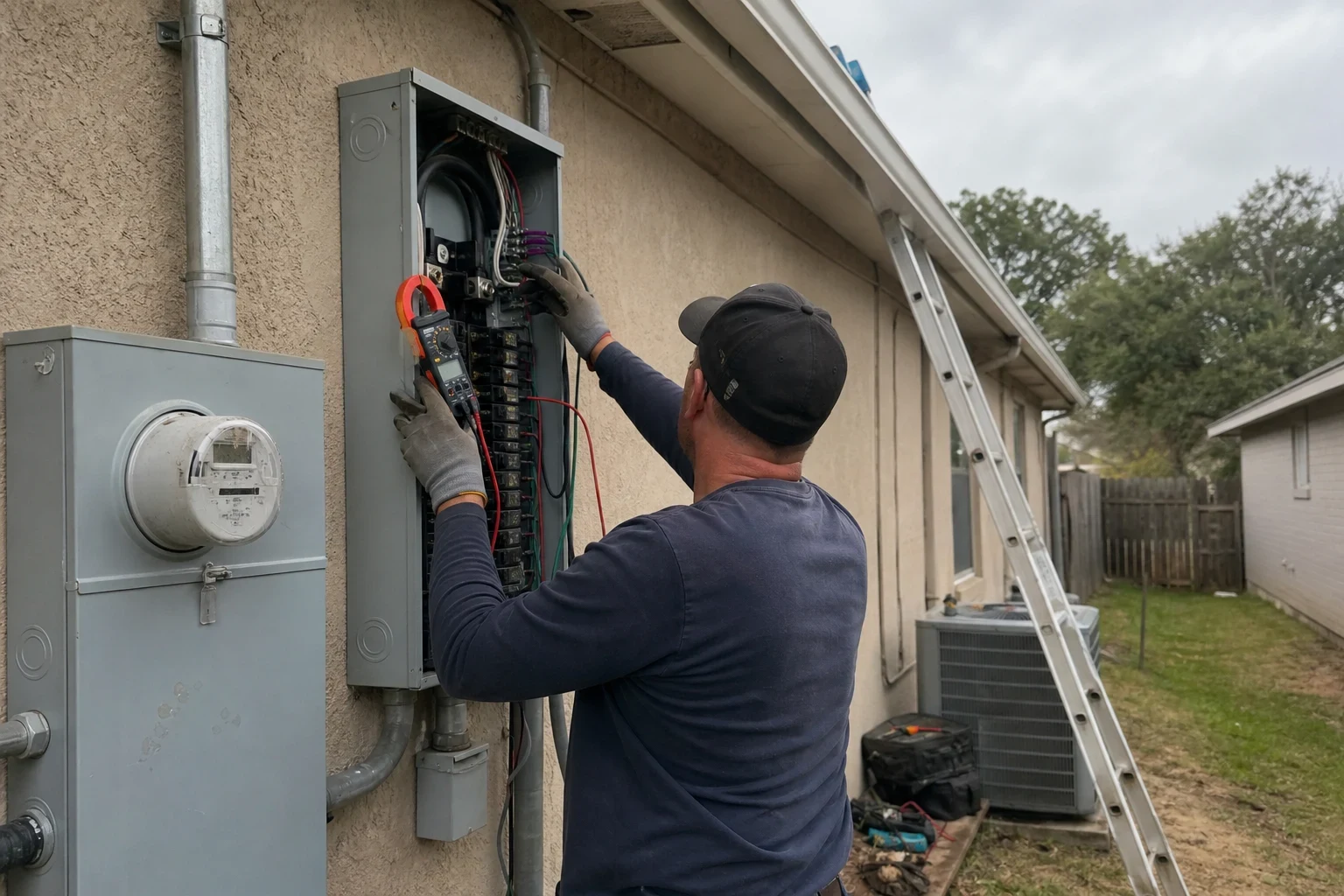
Code corrections means fixing electrical work that does not meet current code or was flagged by someone checking it. Most of our calls start with a piece of paper. A buyer's home inspector wrote up a dozen items. A city inspector failed a permit job. An insurance company wants something fixed before it renews.
We read the report, then we look at each item in person. Some are five-minute fixes, like a missing cover plate. Others point to a bigger problem behind the wall. We tell you which is which, and we only fix what needs fixing.
Timing matters too. A lot of these items, like loose connections and missing GFCI protection, get worse under heavy summer air conditioner loads and spring storm moisture. Clearing them before the season turns keeps a small item from becoming a repair call.
Items We Correct Most Often
- 01
Shock and arc-fault protection
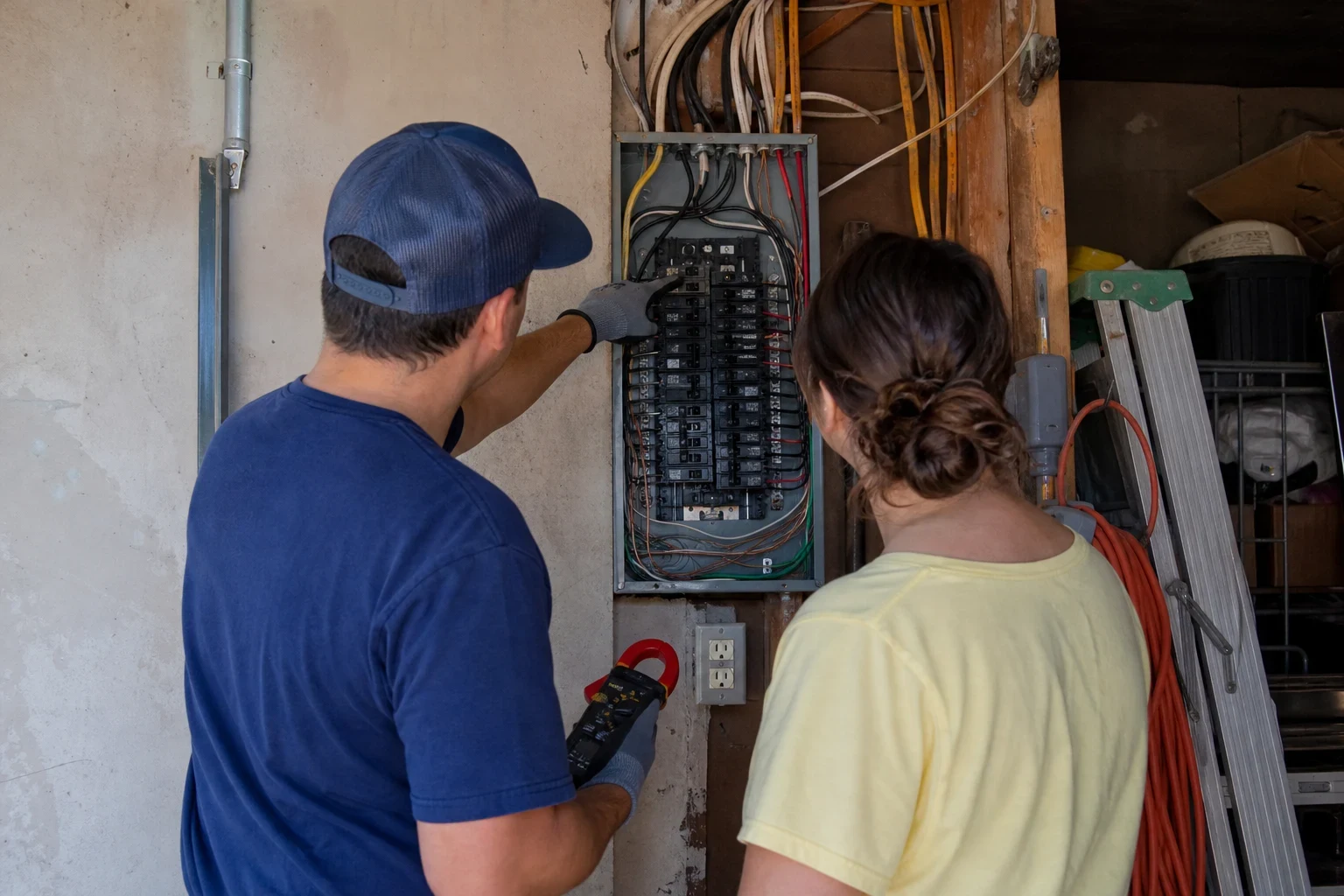
Any outlet near water, from the sink to the garage to the patio, should have ground-fault protection. Bedrooms and most living spaces usually call for arc-fault breakers at the panel. We put the right device where the code wants it, then test it in front of you.
- 02
Double-tapped breakers
Two wires under a screw made for one is one of the most common report items. We pigtail the wires or add a circuit so each conductor has a proper connection.
- 03
Open boxes and loose splices
Splices hanging in the attic or wires twisted together without a box get a real junction box, a cover and secure connections.
- 04
Grounding and bonding
We check the ground rod, the bond to water and gas lines, and three-prong outlets that are not actually grounded. Then we correct what is missing.
- 05
Outdoor outlets and covers
Exterior outlets need weather-resistant devices and in-use covers. Cracked or missing covers let rain in, and our spring storms find every gap.
- 06
Wrong breaker or wire size
A 30-amp breaker on wire rated for 20 amps is a fire risk. We match breakers to the wire, or run new wire where the load needs it.
Questions about Code Corrections?
Call(682) 686-5138Signs You Need Code Corrections
Your home inspection report lists electrical items
Buyers and lenders often want those items closed out before closing. A clear record of what was fixed helps the sale move.
You got a failed or red-tagged inspection
The inspector left a list of corrections. We fix them and get the job ready for re-inspection.
Someone did DIY or handyman wiring
Past owners or helpers often skip boxes, use the wrong wire or miss GFCI protection. That work tends to show up on the next inspection.
Your insurer asked for repairs
Some carriers flag panels, wiring or outlets before renewing. We fix the listed items so you can send them proof.
Outlets without GFCI near water
If your bathroom, kitchen or outdoor outlets have no test and reset buttons and no GFCI breaker protecting them, they likely need an update.
How a Correction Visit Runs
- 1
Send us the report details by phone
When you call, tell us what the report or inspector flagged. We ask about the age of the house and any past work so we come ready.
- 2
Walk the list in person
We check each item at your home, test circuits and open boxes where needed. We show you what we find and explain it in plain words.
- 3
Agree on scope before work
You get a written list of what we will fix and what it costs. Nothing gets added without your OK.
- 4
Make the corrections
We fix the items, test each one and clean up. Permits and inspections are handled as required by the local jurisdiction.
- 5
Hand over a clear record
You get a list of every item and what we did. That is useful for your buyer, your insurer or the re-inspection.
What Moves the Cost
A short list of simple items costs far less than one item that leads into a wall or attic. We price after we see the work, and you approve the written list before we start. Here is what usually makes the biggest difference.
- Number of items
- Ten cover plates and outlet swaps go quickly. Grouping all your items into one visit keeps travel and setup to a minimum.
- Access
- Wiring in a hot attic, behind finished drywall or under a slab takes more time than work at an open panel.
- What is behind the flagged item
- Sometimes a scorched outlet is just a bad outlet. Sometimes it points to a damaged wire run. We tell you which before we go further.
- Permits and re-inspection
- Some corrections need a permit and an inspector's visit. That adds a fee and scheduling time.
- Parts needed
- AFCI and dual-function breakers cost more than standard ones. Older panels may need specific breakers that are harder to find.
Questions About Code Corrections
Can you fix the items on my buyer's inspection report before closing?
Yes, that is a big part of this work. Call us with the report in hand and tell us your closing date. We look at each item, fix what needs it and give you a written list of what was done. Many buyers and lenders want exactly that.
Will you just fix what is on the list, or find more?
We fix what is on the list. If we open a box and find a real safety problem nearby, we show you and explain it. You decide whether to add it. We do not pile on extra work.
Another electrician failed inspection. Can you take over?
Yes. Share the inspector's correction notice with us. We review the work, fix the listed items and get it ready for re-inspection. If the original job has bigger problems, we tell you plainly.
Do you pull the permit for corrections?
When the work requires a permit, we handle it and the inspection as the local jurisdiction requires. Many small corrections, like replacing a cover or an outlet, may not need one. We tell you which applies to your list.
How long does it take?
Most report lists take a few hours to a day. Items that need new circuits or attic work can take longer. If a re-inspection is needed, add the time it takes the inspector to come out.
Is old wiring automatically a code problem?
No. Older wiring that was installed right and is in good shape is usually allowed to stay. Problems come from damage, overloading or later work done wrong. If the whole system is worn out, we will talk with you about whole-home rewiring or panel upgrades.
Get Your List Cleared Before the Season Turns
Tell us what the report says and when you need it done. We will look at every item and fix it right.