ServicesEV Charger Installation
EV Charger Installation in Grand Prairie
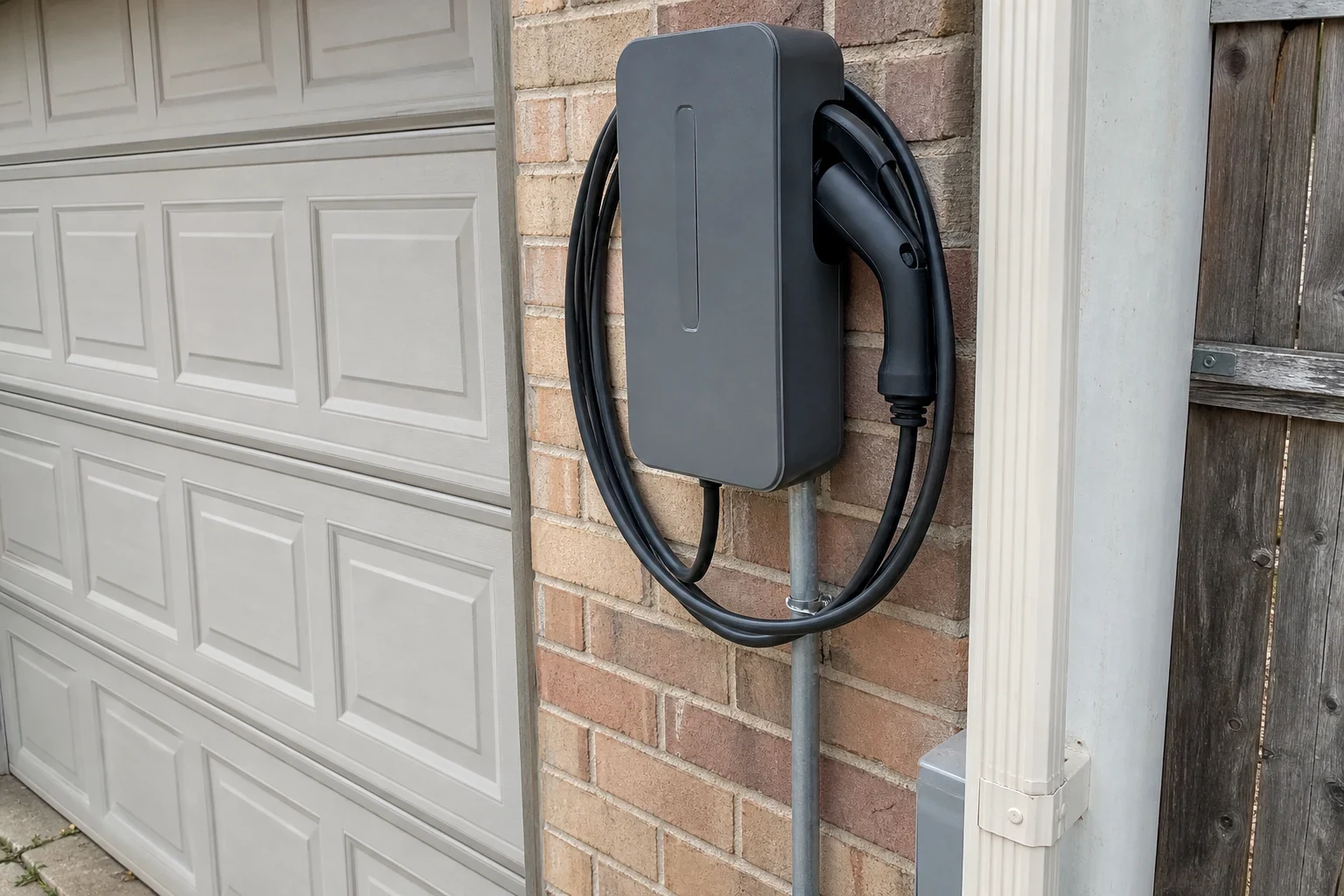
Wall-mounted Level 2 chargers and 240-volt plugs, set up inside your garage or outside on the house. Before anything else we look at your panel. Then we match the circuit to the charger, handle the permit and test it all. Your car fills up overnight on wiring made for that job.
A Dedicated Circuit Built for Your Car
An EV charger pulls a heavy load for hours at a time. A regular garage outlet can trickle-charge a car, but it is slow, and that outlet usually shares a circuit with other things. A Level 2 setup needs its own 240-volt circuit, the right wire size and a breaker matched to the charger.
Most of the work is deciding where the charger goes and whether your panel has room for it. Sometimes the answer is easy. Sometimes the panel is full or already working hard, and we tell you that up front.
Timing matters here. Your home carries its biggest load in summer, when the AC runs all afternoon and into the night. We like to get chargers in and load-checked in spring, so the first hot week doesn't become the first time the panel gets pushed.
What the Install Covers
- Panel and load check
- We look at your panel, the main breaker size and what is already on it. Then we figure out whether a charger circuit fits as is.
- Charger or outlet, your choice
- We can hardwire a wall charger or install a 240-volt outlet for a plug-in unit. We explain the trade-offs so you pick what fits your car and your garage.
- Wire run and breaker
- We run properly sized wire from the panel to the charger location and install a breaker matched to the charger's rating. Outdoor runs get weather-rated fittings and conduit.
- Permit and inspection
- We file for the permit and line up the inspector, following whatever your local jurisdiction asks for. The paperwork is on us, not you.
- Testing and a walkthrough
- We power it up, confirm the charger talks to the car and show you the breaker that feeds it. We clean up drilling dust and scraps before we go.
Signs It's Time for a Charger Circuit
Overnight isn't enough
If a standard outlet can't refill your battery by morning, a Level 2 circuit usually fixes that.
Breaker trips while charging
A trip during charging means the circuit is overloaded or shared. That is a problem to fix, not to reset every night.
Extension cords to the car
Running a cord across the garage floor is not safe for a load like this. Cords heat up, and the plug ends wear out.
Warm outlet or plug
If the outlet or plug feels hot after a charge, stop using it and have it checked. Heat at a connection is how damage starts.
Delivery day is coming
With the wiring ready before the car shows up, you can plug in at full speed on the very first night.
What Moves the Price
No two garages are the same, so we price after we've seen the panel and the route. The written estimate lists each part of the job. Here's what usually makes it go up or down.
Distance from the panel
A charger on the wall right behind the panel is a short run. A detached garage or a driveway post across the yard takes more wire, conduit and labor.
Panel capacity
If your panel has open space and spare capacity, the install is simple. If it's full or already near its limit, you may need a subpanel or one of our panel upgrades first.
Charger amperage
A higher-amp charger needs heavier wire and a bigger breaker. We match the circuit to what your car can actually use, so you don't pay for capacity you won't need.
Wall and finish
Open garage studs are quick. Finished drywall, brick or stucco takes more care to route and patch.
How the Job Goes
- 1
Talk it over by phone
Give us the make and model, the charger you're looking at, and the spot you'd like it. From there we book a service visit at a time that suits you.
- 2
Look at the panel and the spot
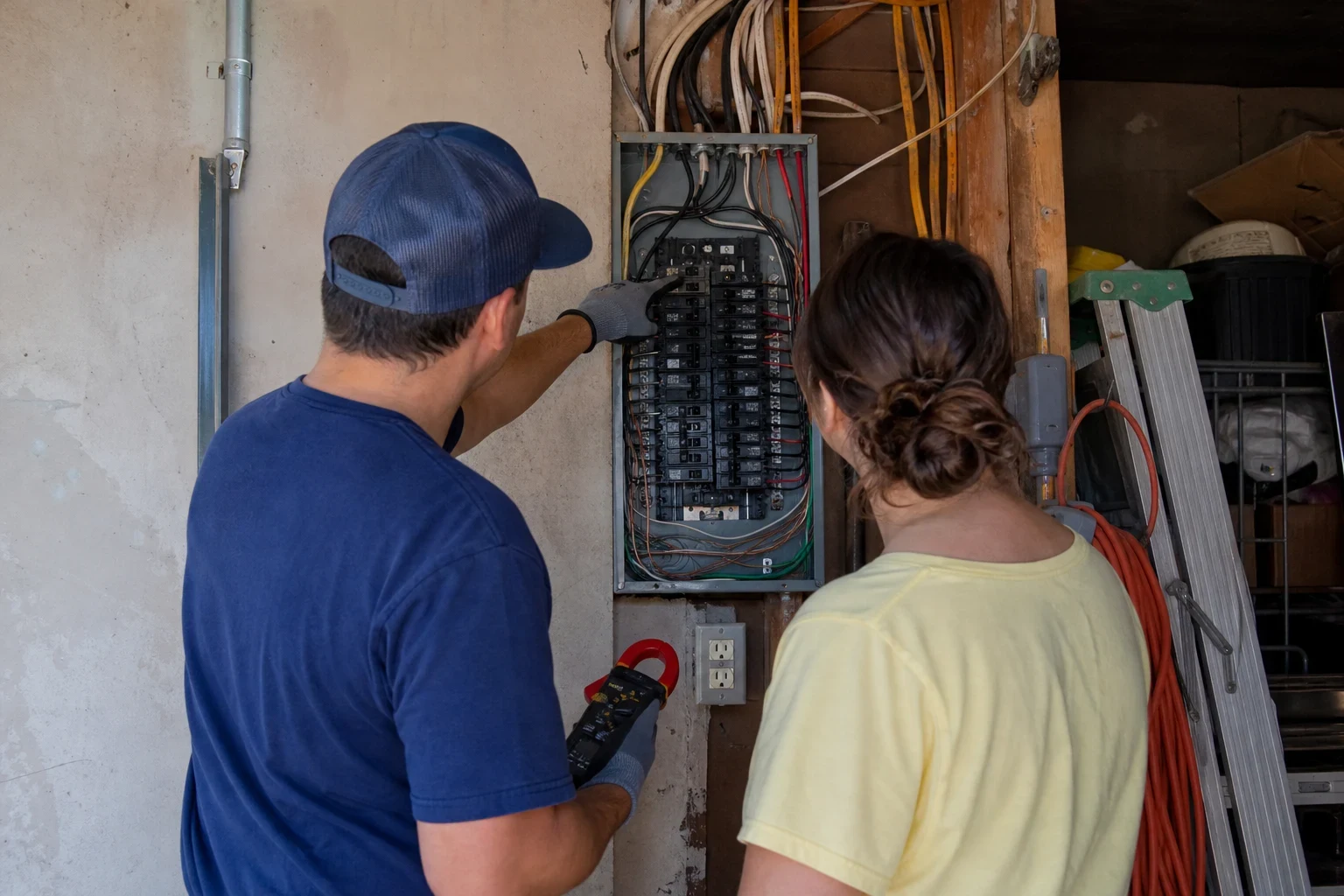
At the visit we check your panel's capacity and measure the run to where the charger will mount. You get a written estimate before any work starts.
- 3
Permit, then install
Once you approve, we file for the permit. Install day usually means mounting the charger, running the wire and setting the breaker, with power off only for the time it takes to connect at the panel.
- 4
Inspect and hand off
We test the charger with your car when possible, then the inspector signs off. We walk you through the breaker and how the charger should behave.
EV Charger Questions We Hear
Do you pull the permit?
Yes. Every charger job we do gets permitted and inspected the way your local jurisdiction requires. We file the paperwork and meet the inspector. The permit cost shows up on your written estimate, so it doesn't catch you off guard later.
Will my panel handle a charger?
Often it will, but we check before we promise anything. We look at the main breaker size, open spaces and the load already on it, including your AC. If it's tight, we explain your options, from a smaller charger setting to a panel upgrade.
Should I get a hardwired charger or a plug-in outlet?
Hardwired chargers are tidy and can often run at a higher amperage. A 240-volt outlet lets you unplug and take a portable charger with you if you move. Either way, the circuit gets sized for the load.
Can the charger go outside?
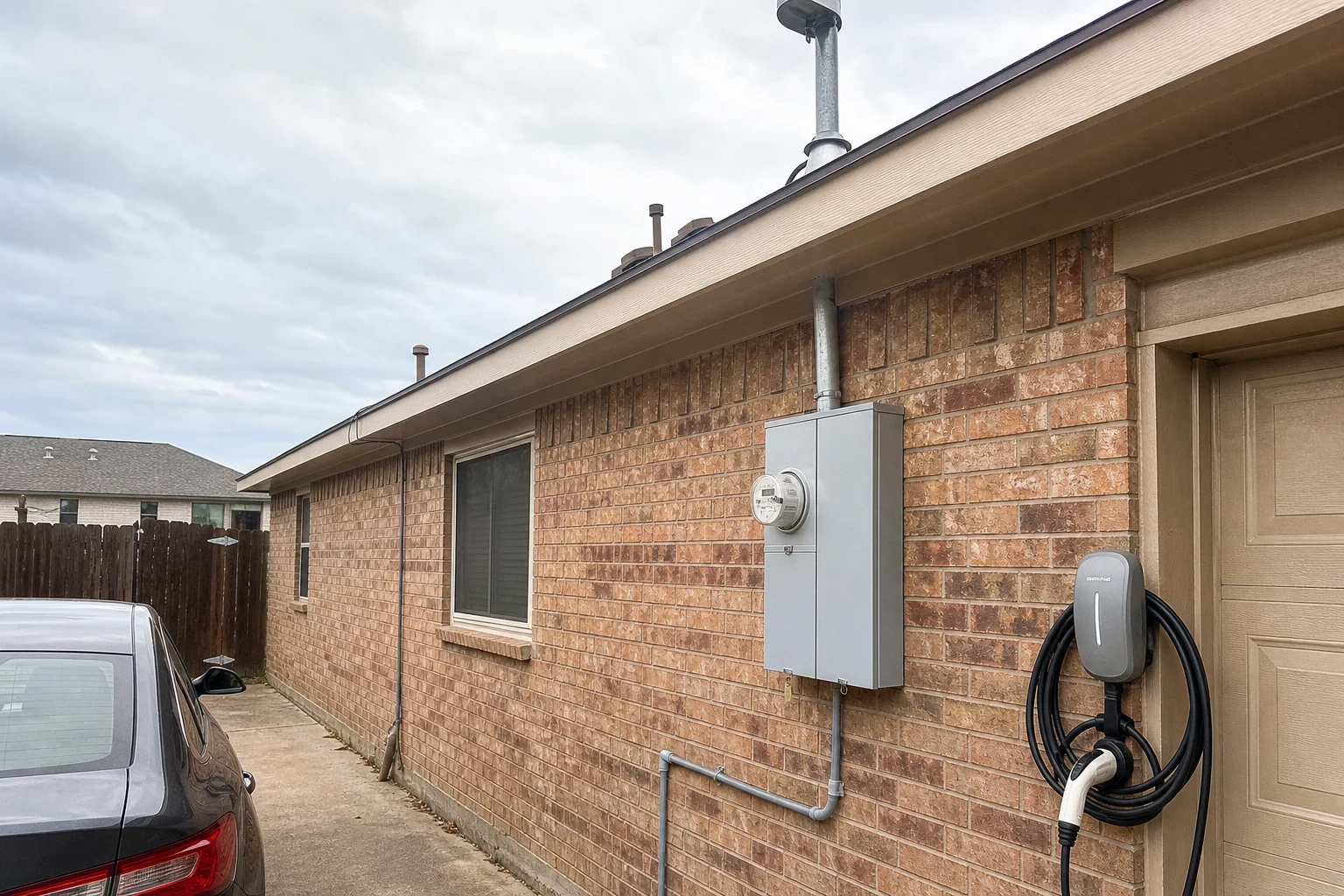
Yes. We use outdoor-rated chargers, weatherproof boxes and conduit for exterior walls and posts. Summer sun and spring storms are hard on equipment, so placement and the right fittings matter.
How long does the install take?
A straightforward garage install is usually done in a day. Long runs, finished walls or panel work add time, and we'll tell you how much at the visit.
Should I add surge protection too?
It's worth talking about. An EV and its charger have a lot of electronics, and North Texas storm season brings lightning. We can look at whole-home surge protection during the same visit.
Get Your Charger In Before Summer
Let us know what you drive and where it sits at night. We'll check the panel, give you a written estimate and get the circuit in before the AC starts working overtime.